 Русский
 Nederlandse taal
 Deutsch
 Francés
 한국어
한국어
 Português
 Español
 日本語
日本語
 ไทย
ไทย


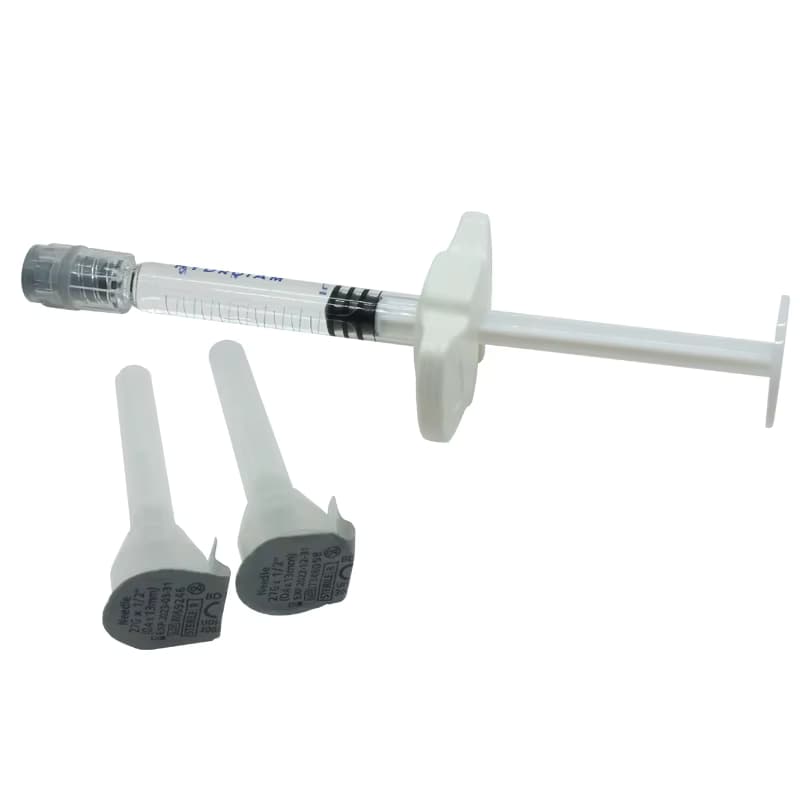

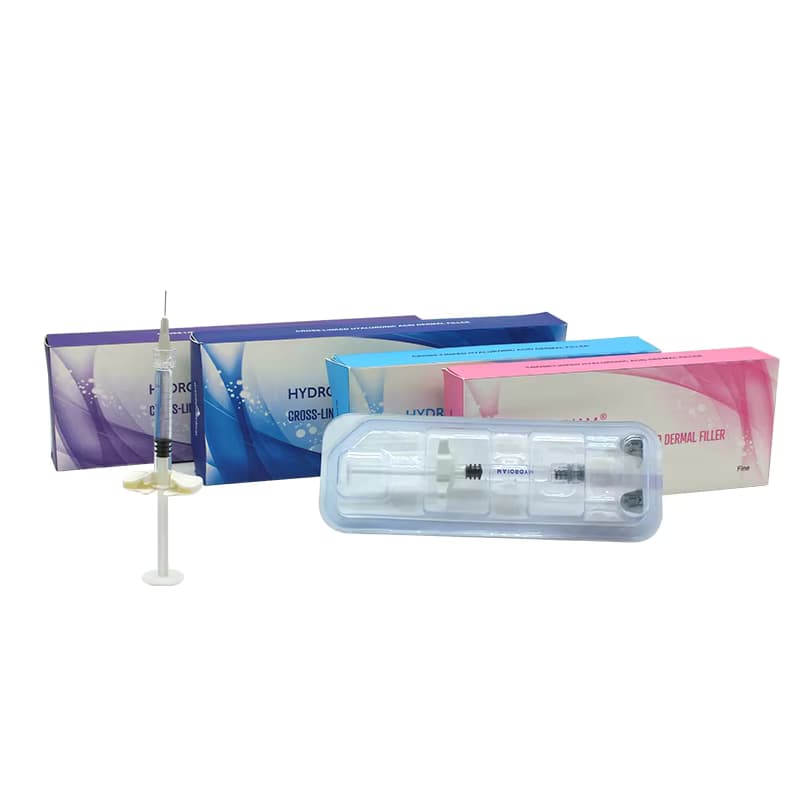

Facial Hydration Fillers
Sub-skin/Deep/Derm/Fine
Content: cross-linked Hyaluronic Acid
Specification: 1ml, 2ml, 3ml, 5ml, 10ml, 20ml, 50ml
Package: Syringe
Advantage:
Natural smooth: uniform texture, soft touch, suitable for shallow filling.
High stability: it is not easy to spread or shift, and the maintenance time is longer.
Low swelling risk: fine and the probability of postoperative swelling .
Product Introduction:
Designed for facial rejuvenation, HA Dermal Filler is an injectable gel composed of hyaluronic acid, a naturally present polysaccharide recognized for its superior biocompatibility and ability to retain moisture. Upon injection into the skin, HA forms a water-binding gel that provides structural support, volumizes the face, and smooths wrinkles. The filler’s formulation incorporates cross-linking technology, typically using agents like BDDE, which constructs a three-dimensional network, ensuring consistent shape, stable performance, and a controlled degradation process. As a result, the treatment effects are long-lasting, generally maintaining optimal results for six to eighteen months.

| Function | Common Treatment Areas | Description |
|---|---|---|
| Wrinkle correction | Nasolabial folds, marionette lines, forehead lines, glabellar lines | Smoothes wrinkles and folds |
| Volume restoration | Temples, cheeks, chin, jawline | Restores facial volume and contour |
| Lip enhancement | Cupid’s bow, lip vermilion border, lip body | Lip augmentation and reshaping |
| Nose reshaping | Nasal bridge, nasal tip | Non-surgical rhinoplasty |
| Tear trough correction | Under-eye hollows | Reduces dark circles and hollowness |
| Hand rejuvenation | Dorsal hand | Improves skin texture and volume |


Instructions for Use
Before starting the procedure, it is important to inspect the filler for integrity and confirm its lot number and expiration date. The skin area to be treated must be properly cleaned and disinfected. To ensure patient comfort, topical anesthetics can be applied, or fillers with lidocaine can be used. The choice of injection instrument—needle or blunt cannula—depends on the anatomical area and desired depth, whether intradermal, subdermal, or supraperiosteal. Injection techniques such as linear threading, serial puncture, fanning, or cross-hatching should be performed carefully, delivering the filler slowly and evenly while avoiding blood vessels. Post-treatment, gentle massage may be applied in certain areas to adjust the contour, and cold compresses can help minimize swelling or redness. Patients should refrain from heat exposure, vigorous exercise, and alcohol consumption for three days, and any ongoing pain, nodules, or redness should be evaluated promptly by a clinician.

Precautions and Contraindications
HA filler procedures are contraindicated in pregnant or breastfeeding individuals, at sites of infection or inflammation, and in patients with a history of keloid-prone skin. Known hypersensitivity to hyaluronic acid or lidocaine also precludes treatment due to potential allergic reactions. Patients with autoimmune disorders or coagulation abnormalities should consult a qualified clinician prior to receiving injections. Treatments must always be carried out by licensed healthcare professionals under sterile conditions, and care must be taken to avoid intravascular placement, which can cause vascular occlusion. Repeat injections in the same area should be delayed by several months to prevent overcorrection or tissue stress. If vascular compromise occurs, indicated by severe pain, pallor, or a livedo reticularis pattern, immediate injection of hyaluronidase is required to rapidly reverse the obstruction and prevent tissue necrosis.

Storage and Transportation
HA filler products must be stored at temperatures between 2°C and 25°C, away from direct sunlight and conditions that could cause freezing. The original packaging should remain sealed and sterile to maintain the product’s quality. It is vital to use syringes and needles only once and never attempt to reuse them, as this could compromise sterility and patient safety. Following these storage and handling practices ensures that each treatment delivers safe, reliable, and effective results.

